Why the Right Area Rug Changes Everything
Knowing how to choose an area rug is one of the most impactful design skills you can develop. A well-chosen rug does what no other single piece can — it anchors your furniture, defines zones within an open floor plan, softens hard flooring, and introduces texture, color, and warmth in one decisive move. Get it right, and your entire room feels intentional. Get it wrong, and even the most beautiful furniture can look adrift.
At Joel's, we see it every day: clients invest thoughtfully in a stunning sofa or a handcrafted dining table, then underestimate the rug. The truth is, a great area rug is the foundation that ties everything together. Here's how to find the one that's right for your space.
How to Choose the Right Rug Size for Every Room
Size is the single most common mistake people make with area rugs — and the fix is almost always the same: go bigger than you think.
A rug that's too small looks like an afterthought. It floats in the center of the room, disconnected from the furniture around it. The goal is for the rug to ground your arrangement and create a cohesive seating or dining zone.
Living rooms:
- For a standard seating arrangement, choose an 8×10 or 9×12 rug so that at least the front legs of your sofa and chairs rest on the rug
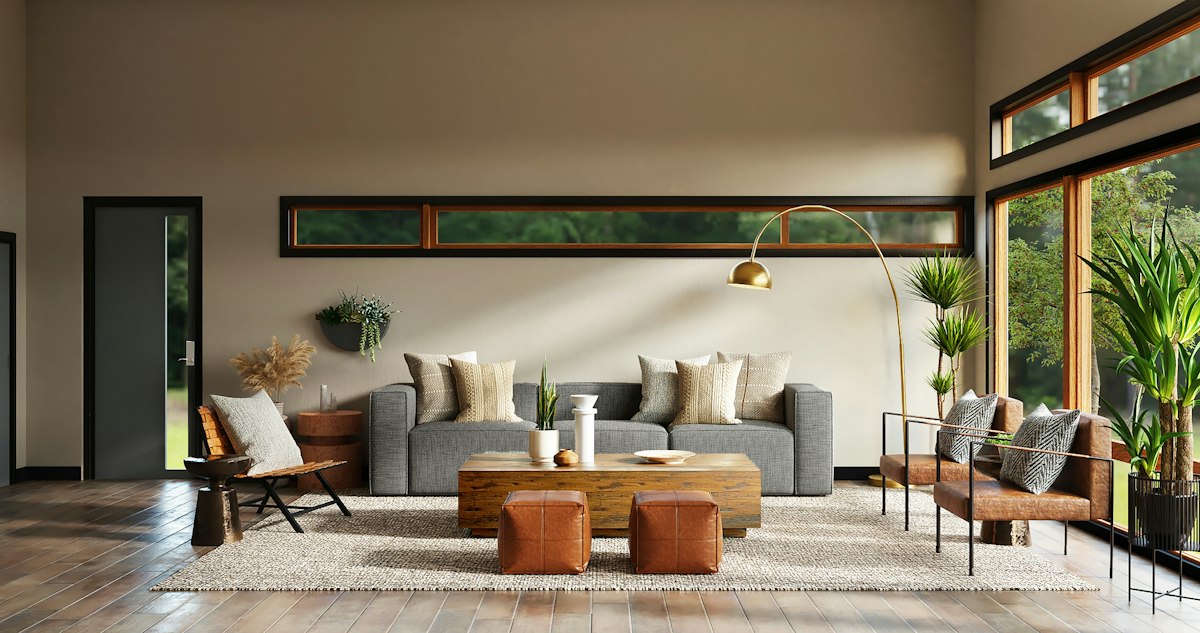
- In larger rooms, size up so all furniture sits fully on the rug with 18–24 inches of bare floor around the edges
- Avoid anything smaller than 5×8 — it will look like a bath mat in a living room
Dining rooms:
- Your rug should extend at least 24 inches beyond each side of the table, so chairs remain on the rug even when pulled out
- For a standard 6-seat rectangular table, start at 8×10 minimum
- Round tables pair beautifully with round rugs — a 6-foot circle under a 4-foot table gives ample room
Bedrooms:
- A large rug (8×10 or 9×12) placed under the lower two-thirds of the bed creates a luxurious landing for bare feet
- Alternatively, use matching runners on either side of the bed for a tailored look
- Leave 12–18 inches of rug visible beyond the sides and foot of the bed
Best Rug Materials for Style and Durability
The material of your rug determines how it feels underfoot, how it wears over time, and how much care it demands. Here's what to know about the most popular options:
- Wool — The gold standard. Naturally stain-resistant, incredibly durable, and beautifully soft. Wool rugs develop a rich patina with age and can last decades with proper care. Ideal for living rooms and bedrooms where comfort matters most.
- Silk and viscose — Luxuriously smooth with a subtle sheen. Best suited for low-traffic areas like bedrooms or formal sitting rooms. These materials are more delicate and benefit from professional cleaning.
- Cotton — Lightweight, affordable, and easy to clean (many are machine-washable). A smart choice for casual spaces, children's rooms, or layering over larger rugs.
- Jute and sisal — Natural fiber rugs bring organic texture and a relaxed, coastal-inspired feel. Extremely durable but can feel rough underfoot. Best for entryways, hallways, or under dining tables.
- Synthetic (polypropylene, nylon) — Highly stain-resistant, fade-resistant, and budget-friendly. Modern synthetics can convincingly mimic wool or silk. Excellent for high-traffic areas and outdoor-adjacent spaces.
Our recommendation: For rooms where you want both longevity and luxury, invest in a quality wool rug. It's the material we recommend most often to our clients because it balances beauty, durability, and ease of care.
Rug Placement Tips Designers Swear By
Even the perfect rug can fall flat with poor placement. These principles will help you position your rug like a professional:
Define the zone, not the room. In open-concept spaces, use rugs to carve out distinct areas — a rug under the seating group, another under the dining table. Each rug creates a visual "room" within the larger space.
Front legs on, or all legs on. For living room seating, either place just the front legs of your sofa and chairs on the rug (this works well for medium rugs) or go large enough for all legs to rest on the rug. The one thing to avoid is having no furniture legs on the rug at all.
Center it on the focal point. In a dining room, the rug centers on the table. In a bedroom, it centers on the bed. In a living room, it centers on the seating arrangement — not necessarily the room itself.
Leave a border of floor. A rug that runs wall-to-wall looks like carpet. Maintain 12–24 inches of exposed floor on all sides to give the rug breathing room and let it function as a design element.
Use a quality rug pad. Always. A good pad prevents slipping, reduces wear, adds cushioning, and protects both your rug and your floor. It's a small investment that dramatically extends the life of your rug.
Choosing a Rug Style That Complements Your Decor
Your rug style should complement your existing decor — not compete with it. Here's a framework for matching rugs to different design aesthetics:
- Contemporary and minimalist spaces call for rugs with clean lines, subtle texture, or understated abstract patterns. Think solid-colored wool, tone-on-tone geometric weaves, or soft gradient designs in neutral tones
- Traditional and classic interiors pair beautifully with Persian and Oriental-inspired rugs. Rich medallion patterns, intricate borders, and saturated jewel tones bring warmth and heritage to formal rooms
- Transitional and modern-classic spaces — the style we work with most at Joel's — benefit from rugs that bridge the gap. Look for updated traditional patterns in muted palettes, or contemporary shapes with handcrafted texture
- Coastal and organic interiors favor natural fiber rugs in jute, sisal, or seagrass, often layered with a softer rug on top for comfort
The key principle: if your furniture and art are bold, choose a quieter rug. If your room is mostly neutral, the rug is your opportunity to introduce pattern and visual interest.
Color and Pattern: Setting the Right Mood
Color and pattern are where a rug becomes personal. A few guidelines to help you decide:
Start with your existing palette. Pull colors from your sofa upholstery, throw pillows, curtains, or artwork. A rug that echoes two or three existing tones will feel immediately cohesive rather than jarring.
Light rugs open a room up. Cream, ivory, and soft beige rugs make spaces feel larger and airier — ideal for smaller rooms or spaces with limited natural light. Yes, they require a bit more maintenance, but a quality wool rug in a light tone is more forgiving than you'd expect.
Dark rugs ground and anchor. Navy, charcoal, and deep jewel tones add drama and formality. They're practical for high-traffic areas and create a striking contrast with light-colored furniture.
Pattern creates energy. A bold geometric or floral rug can serve as the room's statement piece. If you go bold on the rug, keep surrounding textiles and wall art simpler. Conversely, if your room already has strong patterns in curtains or upholstery, a solid or subtly textured rug provides balance.
Consider the room's purpose. Calming, muted tones suit bedrooms. Warm, inviting patterns work in living rooms. Durable, easy-to-clean options in forgiving colors are smart for dining spaces and entryways.
Investing in Quality: What Sets a Great Rug Apart
A quality area rug is a long-term investment — one that can last 20 years or more with proper care. Here's what distinguishes a rug worth investing in:
- Hand-knotted construction offers the highest durability and artistry, with each rug taking months to complete. These pieces appreciate in value and develop character over time
- Dense pile and tight weave indicate a rug that will hold its shape, resist crushing, and feel substantial underfoot
- Natural dyes age gracefully, developing richer tones rather than fading. Synthetic dyes in quality rugs have improved enormously, but natural dyes remain the benchmark for heirloom pieces
- Reputable sourcing matters. Ask where the rug was made, what materials were used, and how the artisans were compensated. A beautiful rug should have a story you feel good about
We believe the right rug is the one that makes you pause every time you walk into the room. It should feel like it was always meant to be there — a quiet anchor that makes everything around it look better.
If you're looking for guidance on choosing the perfect area rug for your space, our team is always happy to help. Reach out to us to start the conversation, or explore our collections for pieces that pair beautifully with the rug of your dreams.